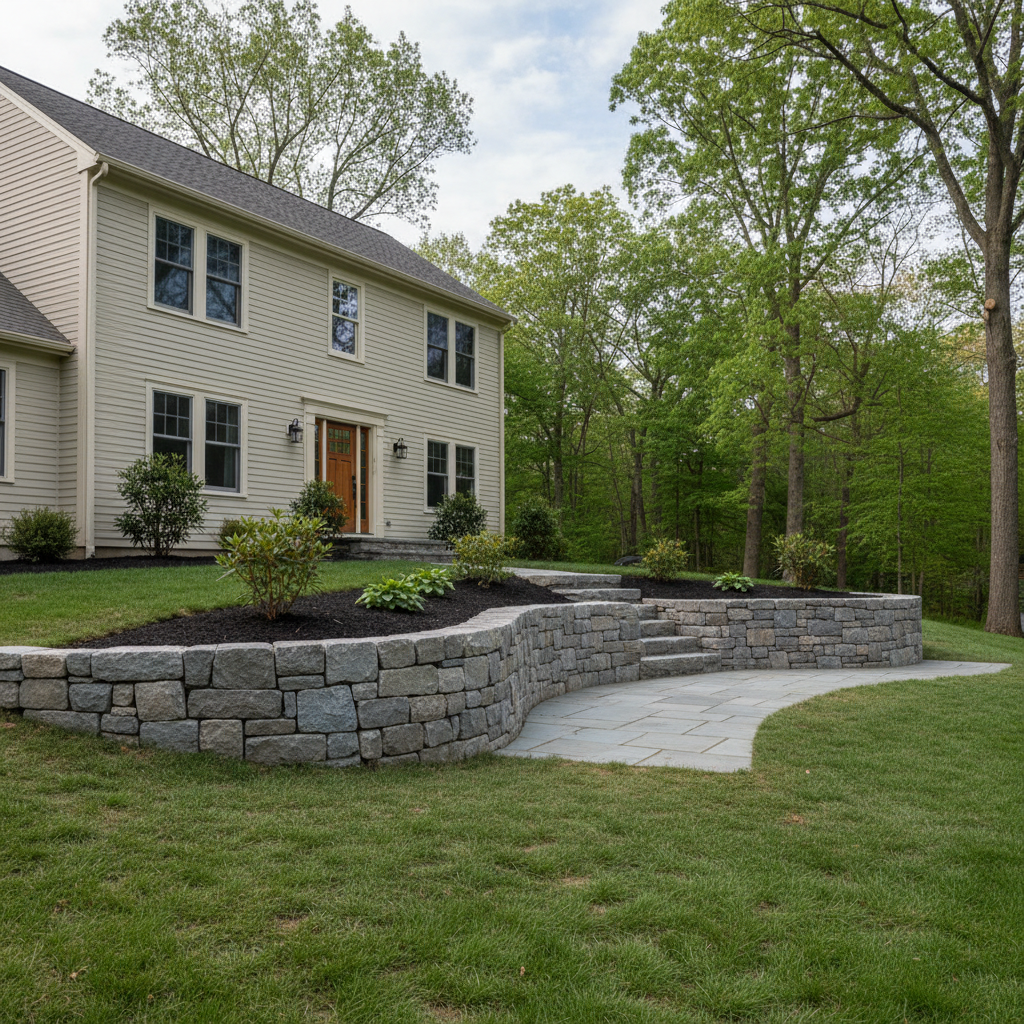
You need a retaining wall, and you're probably wondering, 'What's this going to set me back?' It's a fair question, and frankly, it's one of the first things homeowners ask me. There's no single price tag because every job's different, but I can give you a solid breakdown of what affects the cost and what you should expect to pay here in Needham.
What Drives Retaining Wall Costs?
A lot of factors play into the final price. It's not just about the material you pick, though that's a big one. Here's what I look at when I'm putting together a quote:
- Wall Size: This is pretty obvious, right? Taller and longer walls use more material and take more labor. A 3-foot tall, 20-foot long wall is a lot less work than a 6-foot tall, 50-foot long wall.
- Material Choice: This is huge. You've got options like natural stone, segmental block (like Versa-Lok or Techo-Bloc), poured concrete, or even timber. Natural stone, especially if it's dry-stacked or requires a lot of shaping, is usually the most expensive. Segmental blocks are a popular middle-ground, offering good looks and durability. Timber can be cheaper upfront but doesn't last as long.
- Site Accessibility: Can we get our equipment right up to where the wall needs to go? If we have to hand-dig or wheelbarrow everything because of tight access – say, a backyard with no gate or a steep slope – that adds a lot of labor time. This is common in some of the older, tighter lots around Needham Center.
- Soil Conditions & Drainage: This is critical. If your soil is soft, sandy, or has poor drainage, we might need to do more extensive excavation, add a thicker gravel base, or install a more robust drainage system behind the wall. Good drainage is essential to prevent hydrostatic pressure from pushing your wall over.
- Excavation & Grading: The amount of earth we need to move and how much grading is required before and after construction impacts the cost. Sometimes, we need to bring in fill dirt or haul away excess soil.
- Permits & Engineering: For walls over a certain height (often 3-4 feet, depending on local codes), you'll need engineering plans and town permits. This is a non-negotiable cost and ensures your wall is safe and up to code.
Typical Cost Ranges in Needham, MA
Alright, let's talk numbers. Keep in mind these are ranges, and your specific project could be higher or lower depending on those factors I just mentioned. These prices generally include excavation, base prep, materials, labor, and basic drainage.
- Segmental Block Walls (e.g., Versa-Lok, Techo-Bloc): For a standard residential wall, you're usually looking at $45 to $75 per square foot of wall face. A 4-foot tall, 30-foot long wall (120 sq ft) could run you anywhere from $5,400 to $9,000. This is a very common choice for its durability and aesthetic versatility.
- Natural Stone Walls (Dry-Stacked or Mortared): This is where costs can really climb. For a well-built natural stone wall, expect to pay $75 to $150+ per square foot of wall face. The higher end is for intricate work, larger stones, or difficult access. A 4-foot by 30-foot wall could be $9,000 to $18,000 or more. It's beautiful, but it's an investment.
- Poured Concrete Walls: These are less common for residential landscaping unless they're part of a larger foundation or structural project. They're incredibly strong. Costs can vary wildly but typically start around $60 to $100+ per square foot, often requiring more specialized equipment and forming.
- Timber/Railroad Tie Walls: While less durable, they're often the most budget-friendly upfront. You might see these for $25 to $40 per square foot. However, remember they'll need replacement much sooner than stone or block.
Don't forget about potential extra costs like permit fees (a few hundred dollars), engineering plans (often $1,000-$3,000+ for taller or complex walls), and significant site work if the terrain is really challenging.
What Should Be in Your Quote?
When you get a quote from a contractor, make sure it's detailed. A good quote from All Star Masonry, for example, will clearly outline:
- Scope of Work: Exactly what's being built, including dimensions.
- Materials: Type of block or stone, brand, color, and any capstones.
- Excavation & Base Prep: Depth of excavation, type and depth of gravel base.
- Drainage System: Details on the perforated pipe, gravel backfill, and filter fabric.
- Labor: Estimated hours or a lump sum for installation.
- Permits & Engineering: Who is responsible for obtaining them and if the cost is included.
- Cleanup & Debris Removal: What happens to the old dirt and construction waste.
- Warranty: What kind of guarantee you get on the work.
- Payment Schedule: How payments are structured.
If a quote is just a single number on a napkin, be wary. You want transparency.
How to Avoid Overpaying
Nobody wants to get ripped off. Here's my advice:
- Get Multiple Quotes: This is basic, but essential. Talk to at least three reputable contractors. You'll get a better feel for fair pricing and who you click with.
- Check References & Reviews: See what other homeowners in Needham say about their work. Look for contractors with a strong track record.
- Understand the Details: Don't just compare the bottom line. Compare what's included in each quote. A cheaper quote might be missing crucial drainage or proper base prep, which will cost you more in the long run.
- Ask About Warranties: A good contractor stands behind their work. Make sure you understand the warranty period and what it covers.
- Don't Rush: A retaining wall is a significant investment. Take your time, do your homework, and make an informed decision.
Building a solid retaining wall isn't a DIY job for most people. It requires specific knowledge of soil mechanics, drainage, and proper construction techniques to ensure it lasts. Done right, it'll add value and functionality to your Needham home for decades. Done wrong, it can be a costly headache. If you're ready to get a detailed, transparent quote, give us a call at All Star Masonry. We're happy to walk you through the process.