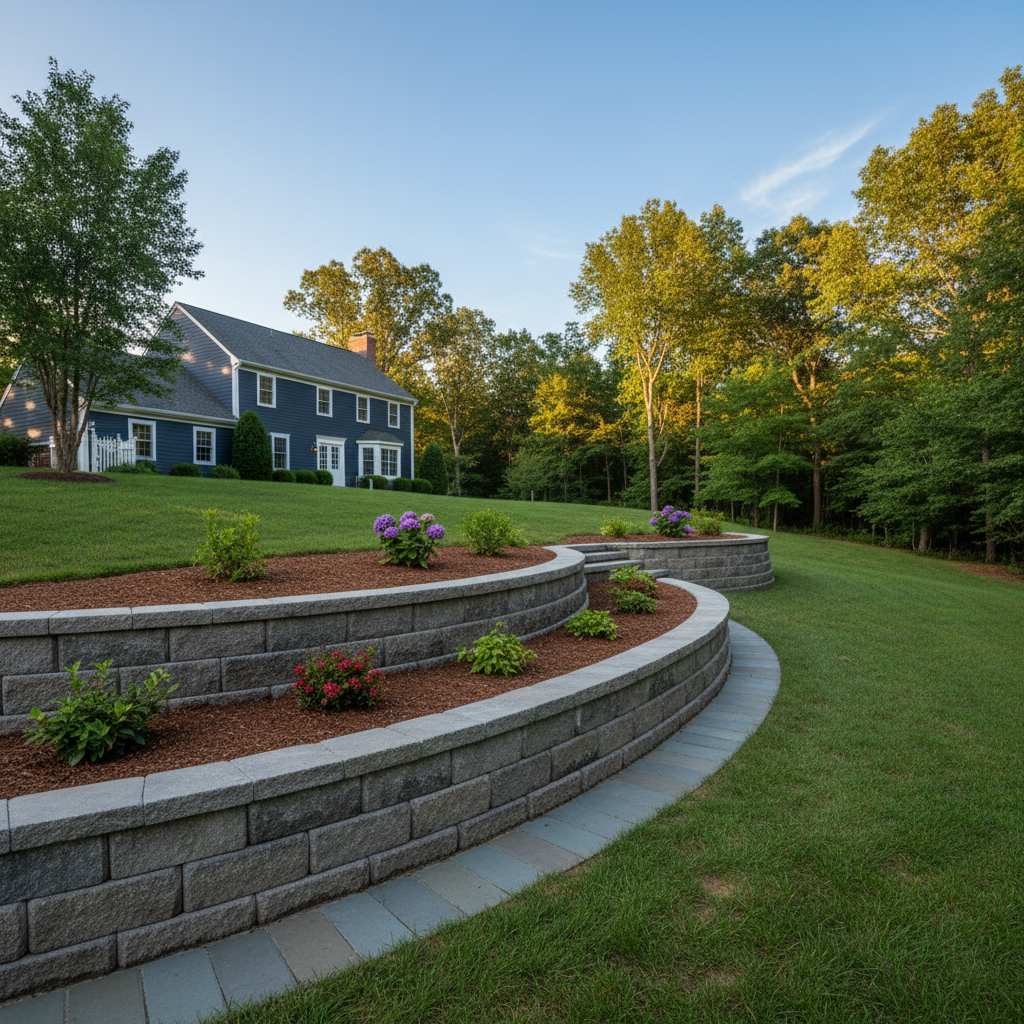
Alright, let's talk retaining walls. I've been building them around Needham for years, from the older homes near Needham Center to the newer developments out by N. Hill. And believe me, I've seen it all when projects go south. You want a wall that actually works, looks good, and lasts, right? So let's just get straight to the biggest screw-ups I see homeowners make.
Mistake #1: Ignoring the Ground Beneath Your Feet
This is probably the biggest one, hands down. People often think building a retaining wall is just about stacking blocks or stones. But really, it’s much more about what’s underneath. We’ve got all sorts of soil conditions around here – some spots are pretty rocky, others have that classic New England clay that just holds water like crazy. If you don't factor in the soil, you're practically asking for trouble.
I've seen walls fail because the foundation wasn't dug deep enough. Or maybe the soil wasn't properly compacted. If your wall is holding back a lot of earth, especially on a slope, that pressure is absolutely immense. You need a solid, well-drained base. Skipping a proper geotechnical assessment or just assuming the ground is fine? That's a huge gamble. A good contractor will always bring up drainage and proper base prep. If they don't, well, that's a red flag, isn't it?
Mistake #2: Underestimating the Power of Water
Water is the enemy of any retaining wall. Full stop. If you don't handle water effectively, it'll find a way to undermine your wall, push it over, or make it lean. I'm talking about hydrostatic pressure – that force of water building up behind the wall. It's incredibly powerful.
You absolutely need a strong drainage system behind your wall. This usually means a layer of gravel, a perforated drain pipe (often called a 'French drain'), and good outlets for that water to get out. I've seen homeowners try to save a few bucks by skimping on this, and within a year or two, their wall is bulging or cracking. Especially with our New England winters and spring thaws, you just can't afford to ignore drainage. When I'm working on a project for All Star Masonry, drainage is always a top priority. It's non-negotiable.
Mistake #3: Picking the Wrong Wall Type for the Job
There are different kinds of retaining walls, and each one has its good points and its bad points. You've got gravity walls, segmental block walls, timber walls, poured concrete, and natural stone. What works for a small garden bed might not cut it for a 6-foot-tall wall holding back a driveway, you know?
For example, a dry-stacked segmental block wall is great for many uses. But for really tall walls, or ones under a heavy load, you might need something engineered with geogrid reinforcement, or even a poured concrete wall. I've seen people try to build a tall wall with flimsy materials, thinking they're saving money. They're not. They're just building a future problem. A good contractor will explain the pros and cons of different materials and recommend what's best for your specific site and the height of the wall you need.
Mistake #4: Skipping the Permits and Professional Design
I know, I know. Permits can be a real pain. But for retaining walls over a certain height (often 3 or 4 feet, depending on Needham's specific bylaws), you absolutely need one. And with that permit often comes the requirement for an engineered design.
This isn't just bureaucracy, believe me; it's about safety and how long the wall will last. An engineer will check your site, soil, and the load the wall needs to hold, then design a wall that's structurally sound. Trying to bypass this often leads to walls that fail, and then you're not only dealing with a collapsed wall but also potential fines from the town. Plus, if you ever sell your house, an unpermitted structure can cause headaches during inspection. Don't cut corners here; it's just not worth the risk.
Mistake #5: Hiring on Price Alone (The "Cheapest Bid" Trap)
This is a classic. You get three bids, and you go with the lowest one. I get it, everyone wants to save money. But with retaining walls, the cheapest bid is often cheap for a reason. Maybe they're skipping proper drainage, using inferior materials, or just don't have the experience to do it right.
When you're comparing bids, don't just look at the bottom line. Ask detailed questions: What kind of foundation will they build? How will they handle drainage? What materials are they using, and are they warrantied? Do they have references for similar projects? Are they licensed and insured? A reputable contractor, like us at All Star Masonry, will be transparent about their process and what's included. You're building a structural element that needs to last decades. Investing a little more upfront for quality work will save you a fortune in repairs down the road.
Building a retaining wall is a significant investment. Do your homework, ask the tough questions, and don't be afraid to walk away from a contractor who can't give you clear, confident answers. You want a wall that stands strong, not one that gives you a headache.